Gain control and consistency of your SAP Environment

Managing configuration across SAP environments becomes increasingly complex as systems evolve, environments multiply, and changes need to be applied consistently across teams and locations.

Configuration orchestration introduces a structured and controlled way to manage change across your SAP landscape, ensuring that updates are applied consistently, tracked clearly, and aligned across systems from the outset.

Deliver with speed and accuracy

  • Reduce time from days to minutes.
    Automate processes to significantly reduce the time required to implement and manage changes.
  • Maintain consistency across environments.
    Ensure configurations are applied consistently across development, testing, and production environments.
  • Improve visibility and governance.
    Track configuration changes across systems and environments, enabling clearer control & stronger auditability.
  • Reduce risk and rework.
    Minimise manual intervention and prevent errors that lead to rework and operational disruption.

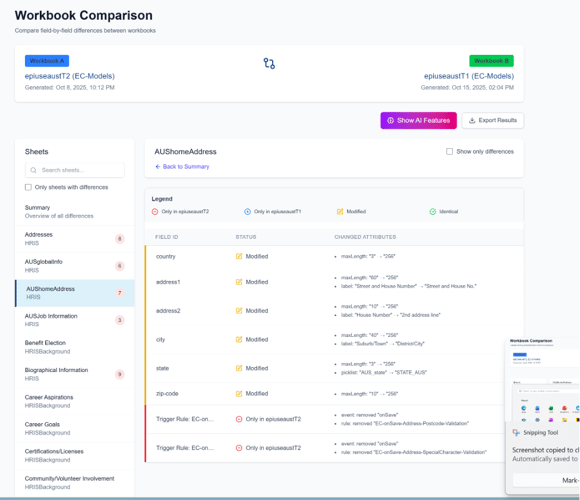
Workbook-Comparison

Most client challenges post-go-live stem from underutilised systems & misaligned strategy. We solve both.

Configuration issues are often only identified after changes have been deployed, creating rework, delays, and avoidable risk across environments.

Where configuration becomes difficult to manage

Challenges often emerge as SAP landscapes grow, environments increase, and configuration changes need to be managed across multiple systems and teams.

Manual configuration processes that are time-consuming and difficult to scale.

Limited visibility into changes across systems and environments.

Inconsistent configuration between development, test, and production environments.

Lack of structured governance and control over configuration changes.

Increased risk of errors, rework, and system misalignments.

Difficulty understanding how configuration changes in one environment impact others.

A structured approach to managing configuration

Step 1: Configuration visibility

Gain visibility into configuration across your SAP landscape, including differences between environments that are often difficult to identify manually.

Step 2: Standardisation and control

Define and apply consistent configuration standards across systems, reducing variation and ensuring alignment between environments.

Step 3: Automated deployment

Deploy configuration changes across environments in a controlled and repeatable way, reducing manual effort and improving consistency.

Step 4: Ongoing governance and optimisation

Monitor, manage, and refine configuration over time to maintain alignment as systems and business requirements evolve.

2.Deliver configuration with speed and control

Supported SAP platforms:

SAP SuccessFactors

Lorem ipsum dolor sit amet consectetur. Nulla viverra lectus nunc sit fusce. Eleifend ullamcorper integer consequat bibendum sed. Eget imperdiet est mattis consequat ac egestas eget dui ornare. Neque eu ut dignissim vel arcu et. Convallis quisque sed neque accumsan vitae.

SAP Cloud ERP (S/4HANA)

Lorem ipsum dolor sit amet consectetur. Nulla viverra lectus nunc sit fusce. Eleifend ullamcorper integer consequat bibendum sed. Eget imperdiet est mattis consequat ac egestas eget dui ornare. Neque eu ut dignissim vel arcu et. Convallis quisque sed neque accumsan vitae.

Reduce administrative effort, enhance productivity and minimise errors.

  • Faster configuration cycles with reduced manual effort.
  • Consistent configuration across systems and environments.
  • Clear visibility into changes across your SAP landscape.
  • Stronger governance and control over configuration.
  • Reduced risk of errors, rework, and downstream disruption.

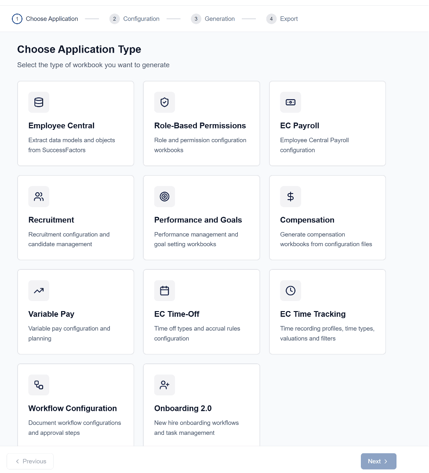
Application-type

Maintaining control as your SAP landscape evolves

As your SAP environment evolves, maintaining consistency and control becomes more complex.

Configuration orchestration provides a structured way to manage ongoing change, helping organisations maintain alignment across systems, reduce operational risk, and respond more effectively as new requirements emerge.